Mandala Farmhouse: A Sweet Script Handwritten Font for Personal Branding
I remember the first time I dropped Mandala Farmhouse onto a blank brand board. I was working on a visual identity for a local boutique café—the kind of place that serves lavender lattes and houses a small collection of handmade ceramics. The client wanted something that felt personal, romantic, and just a little bit whimsical. Most script handwritten fonts I had tested felt either too polished or too casual, but this one struck a different chord. It had a dainty, joyful rhythm that immediately made me think of wedding invitations, handwritten notes, and slow Sunday mornings. I knew right then that Mandala Farmhouse would become the centerpiece of the brand.
Mandala Farmhouse for Wedding Invitations and Elegant Stationery
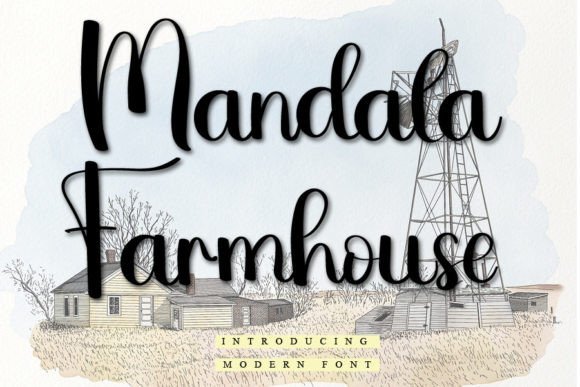
Mandala Farmhouse is a sweet and delicate handwritten font that immediately feels at home on wedding invitations and romantic stationery. When I placed it on a mockup of a save-the-date card, the letterforms carried a lightness that felt almost hand-painted. Each character has a gentle sway, with subtle variations in stroke weight that mimic natural handwriting. This is not a font that screams for attention—it whispers. For designers working on wedding suites, bridal shower invites, or anniversary announcements, this script handwritten font brings an intimate, personalized quality that standard calligraphy fonts often miss. I tested it on a set of thank-you cards for the café project, and the client’s response was immediate: “That’s exactly the warmth I wanted.” The font’s delicate structure works especially well on cream or textured paper stocks, where the ink appears to settle into the fibers like real handwriting.
Using Mandala Farmhouse in Logo Design and Brand Identity
When I started testing Mandala Farmhouse for logo design, I noticed how its dainty and joyful character could carry a brand's personality without overwhelming the composition. For the café’s primary logo, I set the business name in Mandala Farmhouse at a moderate size and placed it above a simple line illustration of a coffee flower. The contrast between the refined script and the clean linework created a balanced mark that felt both artisanal and approachable. I’ve since used this font in brand identity projects for a small skincare line and a handmade pottery shop. In each case, Mandala Farmhouse acted as a display font—something you use for the hero word or phrase, not for long paragraphs. It brings a sense of care and intention to a logo. If you’re building a brand around slow living, natural ingredients, or crafts, this handwritten font can anchor your identity with authenticity.
Pairing Mandala Farmhouse with a Serif Font for Editorial Design
One of the first things I do with any script handwritten font is find a reliable serif font to pair it with, and Mandala Farmhouse works beautifully alongside a classic serif. For the café’s menu and lookbook, I paired it with a lightweight serif like EB Garamond or a modern alternative such as Cormorant Garamond. The serif font handled the body text—ingredient lists, descriptions, and story sections—while Mandala Farmhouse appeared in headings, pull quotes, and accent lines. This combination created a clear visual hierarchy. The script font drew the eye to key moments, while the serif kept the reading experience comfortable and grounded. I also tested it with a clean sans serif for a more contemporary feel, but the serif pairing felt more aligned with the romantic, handcrafted direction. If you’re designing editorial pieces like lookbooks, menus, or brand guides, this pairing gives you both personality and professionalism.
Applying Mandala Farmhouse on Packaging and Product Labels
For packaging design, Mandala Farmhouse brings a handmade feel that works especially well on product labels for boutique skincare, small-batch food, and artisan goods. I used it on a series of label mockups for the skincare line—face oils, balms, and serum bottles. The font’s delicate strokes sat comfortably on small label surfaces without feeling crowded. I kept the layout simple: the product name in Mandala Farmhouse, with ingredient details in a small sans serif below. The result looked like something you would find at a weekend farmers’ market, not a mass-produced shelf. When I tested the same approach on coffee bags and tea tins for the café, the font added a layer of storytelling. It suggested that the product was made slowly, by hand, with attention to detail. For designers working in packaging, this script handwritten font is a strong tool for building trust and emotional connection with customers.
Mandala Farmhouse for Social Media Graphics and Website Headers
Beyond print, Mandala Farmhouse translates well into social media graphics and website headers where a romantic, personalized touch is needed. I built a set of Instagram story templates for the café using the font as the primary headline element. Over soft pastel backgrounds, Mandala Farmhouse appeared in phrases like “morning ritual” and “made with love.” The font remained readable at mobile sizes, which is not always the case with delicate scripts. On the website, I used it in the hero section for a short welcome statement, paired with a muted photograph of the café interior. The font’s organic curves softened the digital environment and made the brand feel more human. If you’re creating digital assets for a lifestyle brand, wedding planner, or small business, Mandala Farmhouse can bring a warm, handwritten accent to your online presence without losing clarity.
Testing Mandala Farmhouse Before Building a Full Brand System
Before committing Mandala Farmhouse to a full brand system, I always test it across multiple formats to see how it holds up in different contexts. For this font, I recommend running a few quick checks. First, view it at very small sizes—business cards, label corners, or mobile screens—to ensure the delicate strokes remain legible. Second, test it on both light and dark backgrounds. Mandala Farmhouse shines on light, airy backgrounds but may need careful spacing on darker tones. Third, check if the font includes alternates or ligatures. Many script handwritten fonts offer stylistic sets that let you vary the letterforms, which is useful for avoiding repetition in longer phrases. I also confirm the file formats available: most commercial fonts come in OTF or TTF, and for web use, a WOFF version can be helpful. Finally, review the commercial licensing to confirm the font is cleared for logo use, packaging, and digital assets. Taking these steps ensures that Mandala Farmhouse performs reliably across the entire brand ecosystem, from print to screen.
Throughout this project, Mandala Farmhouse proved to be more than just a pretty typeface. It became the voice of the brand—a sweet, delicate, and joyful script handwritten font that carried the client’s story into every piece of communication. Whether you’re designing wedding invitations, packaging for a handmade product, or a complete brand identity, this font offers a level of personalization that connects with audiences on an emotional level. It reminds me why I love working with type: the right font can turn a design into a conversation.