Testimony: A Script Handwritten Font That Brings Elegance to Any Branding Project
I remember the moment I opened a blank brand board for a new client—a small café that wanted to feel both polished and personal. I had already sketched a few logo concepts, but nothing clicked until I dropped in a preview of Testimony. Right away, the letterforms had a warmth that felt like handwritten notes from the owner to every guest. As a graphic designer always on the hunt for a Script Handwritten font that balances beauty with readability, I knew this was the typeface I had been looking for. Testimony is a beautiful and elegant handwritten font, cute and fun enough for wedding invitations yet refined enough for serious brand work. Over the next few weeks, I used it across every piece of the café’s identity—from the storefront sign to the menu boards and even the social media templates. This article walks through how Testimony performed in a real branding project and why it might be the perfect addition to your font library.
What Makes Testimony a Standout Script Handwritten Font for Designers
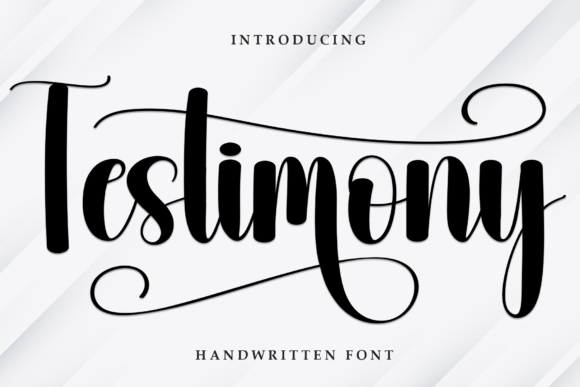
When I first examined Testimony, I noticed how the strokes balanced spontaneity with structure. Many handwritten fonts lean too far into messy, becoming hard to read at small sizes, or they feel overly stiff, losing that human touch. Testimony sits right in the sweet spot. Each character has a natural bounce, with varying baseline heights that mimic real handwriting, but the overall rhythm stays controlled enough for professional use. The lowercase letters flow together smoothly, while the uppercase forms carry a bit more flourish—perfect for drawing attention to a brand name or a headline. This is a Script Handwritten font that feels simultaneously approachable and upscale, which is exactly what a café, boutique, or creative studio needs to stand out without looking amateurish.
Using Testimony for Wedding Invitations and Elegant Brand Collateral
One of the first things I tested was how Testimony would look on a wedding invitation suite. The client wasn’t planning a wedding, but the café wanted to host a seasonal launch party, and the invitation needed to feel celebratory and refined. I set the main headline in Testimony at 36 points, and the invitation instantly looked like something from a letterpress studio. The cute and fun personality of the font came through in the way the descenders curled slightly, giving each line a gentle elegance. I paired it with a clean serif for the body text, and the contrast was immediate—Testimony became the visual anchor, drawing the eye while the supporting type handled the details. For any designer working on wedding invitations, cards, or event collateral, this font delivers a handmade feel without sacrificing polish.
How Testimony Performed in Logo Design and Brand Identity
Building the café’s logo was where Testimony really proved its versatility. I started by setting the business name in all lowercase with a slight letter-spacing adjustment—about 20 tracking. The result was a wordmark that felt like a friend’s handwriting on a chalkboard sign. I also experimented with using the initial uppercase letter as a standalone emblem, and the decorative curves added enough personality to work as a monogram on napkins and tote bags. Because Testimony is a Script Handwritten font, it naturally lends itself to hero roles in a brand system, but I always recommend testing how it behaves at different sizes. On the café’s storefront sign, the font remained legible from across the street, even in a lighter weight. For brand identity projects where you need warmth and recognizability, Testimony holds its ground beautifully.
Testimony in Packaging Design and Product Labels
The café planned to sell small-batch coffee blends and handmade pastries, so packaging was a major part of the project. I placed Testimony on label mockups for coffee bags and pastry boxes, and the font adapted seamlessly to curved surfaces and small spaces. For product names like “Morning Blend” or “Honey Lavender Scone,” the cute yet elegant lettering made each item feel artisanal. One practical tip I learned: when using Testimony on packaging, keep the text short—it works best for headlines, product names, and taglines rather than long ingredient lists. For those details, I switched to a neutral sans serif. This kind of font pairing is essential because Testimony shines brightest when it has room to breathe. If you design product labels for skincare, candles, or food items, this Script Handwritten font will elevate your packaging without overwhelming it.
Pairing Testimony with a Clean Sans Serif for Digital and Print Materials
No font works in isolation, and finding the right partner for Testimony was a key part of my process. I settled on a lightweight geometric sans serif for body text, menu descriptions, and website paragraphs. The contrast between the organic handwritten strokes of Testimony and the crisp neutrality of the sans serif created a clear visual hierarchy. On the café’s menu board, Testimony announced each section header—“Coffee,” “Tea,” “Pastries”—while the sans serif handled the descriptions and prices. This pairing also worked well on Instagram posts: Testimony for the quote or announcement, and the sans serif for hashtags and secondary copy. For designers building a full brand system, I suggest testing Testimony alongside a few different sans serif and serif options to see which combination matches your project’s tone. The font pairs naturally with modern typography that stays out of its way.
Testing Testimony on Social Media Graphics and Digital Templates
Social media is where a brand’s personality gets the most daily exposure, so I wanted to see how Testimony performed on mobile screens. I created a set of Instagram story templates using the font for headlines and call-to-action phrases. On a bright background, the handwritten style felt friendly and immediate—exactly the kind of energy a local café wants to project. I also tested it on Facebook cover images and pinned Pinterest graphics. One thing I noticed: because Testimony has a natural rhythm, it works best when you keep the text alignment left or center. Justified or fully blocked settings can disrupt the flow. For digital templates, I recommend using Testimony at sizes above 28 points to preserve its cute detailing. This is a display font at heart, so give it space to be seen. Whether you are designing social media graphics for a boutique or a creative studio, this Script Handwritten font adds a human layer that stock photography cannot replicate.
How Testimony Affects Brand Perception and Audience Engagement
During the project, I showed two versions of the café’s menu to a small test group—one set in a standard sans serif and one using Testimony for the headers. Almost everyone described the Testimony version as “warmer,” “more personal,” and “inviting.” That feedback reinforced something I have seen many times: the right Script Handwritten font can shift how an audience perceives a brand. Testimony made the café feel like a place where the owner knows your name, rather than a generic chain. For small business owners, entrepreneurs, and bloggers, this emotional connection is worth investing in. The font does not just decorate text—it communicates personality, care, and authenticity. In a crowded market, that subtle difference can turn a casual browser into a loyal customer.
Practical Tips for Testing Testimony Before a Full Brand Rollout
Before committing a font to a whole brand system, I always run a few quick tests. With Testimony, I created a simple brand board with the logo, a few product label mockups, a business card layout, and a social media post. I printed the business card at actual size to check legibility, and I viewed the digital mockups on both a phone and a laptop screen. Testimony passed every test: the letterforms remained clear, the cute details stayed visible, and the overall impression was consistent across media. I also checked for ligatures and alternate characters—when a Script Handwritten font includes those, you can add even more personality to specific words. For designers and freelancers, I recommend downloading the font preview and testing it in your own project files before making a purchase. Seeing Testimony in your own layout will show you exactly how it performs with your content.
Testimony for Commercial Font Licensing and Client Deliverables
When you find a font that works this well, the next question is licensing. For the café project, I made sure the commercial license covered all the deliverables—logo files, packaging, printed menus, website headers, and social media templates. Many Script Handwritten fonts require separate licenses for print and digital use, so it is worth checking the terms before you start a client project. Testimony’s licensing is straightforward, which makes it a reliable choice for freelancers and studios who need to deliver polished assets without legal headaches. Whether you are creating design assets for a single client or building templates for a creative marketplace, this font supports professional workflows from start to finish.
Final Thoughts on Adding Testimony to Your Typeface Library
After working with Testimony across a full branding project, I can say confidently that this Script Handwritten font deserves a spot in any designer’s toolkit. It is versatile enough for wedding invitations and elegant enough for brand identity work, with a cute and fun personality that never feels childish. If you are a graphic designer, brand designer, creative studio owner, or small business entrepreneur looking for a font that connects with people on a personal level, Testimony is worth every file download. Try it on your next logo draft, your next label mockup, or your next social media template—and watch how a single typeface can transform the way your audience sees your work.